The Rise of Open-Source HR Software: Why It's the Future
The HR software market has been dominated by a handful of large, proprietary vendors for decades. Companies like Workday, SAP SuccessFactors, and BambooHR built powerful platforms — and charged accordingly. But a quiet revolution has been building: open-source HR software is reaching maturity, and organizations of all sizes are taking notice.
The Cost Problem in HR Software
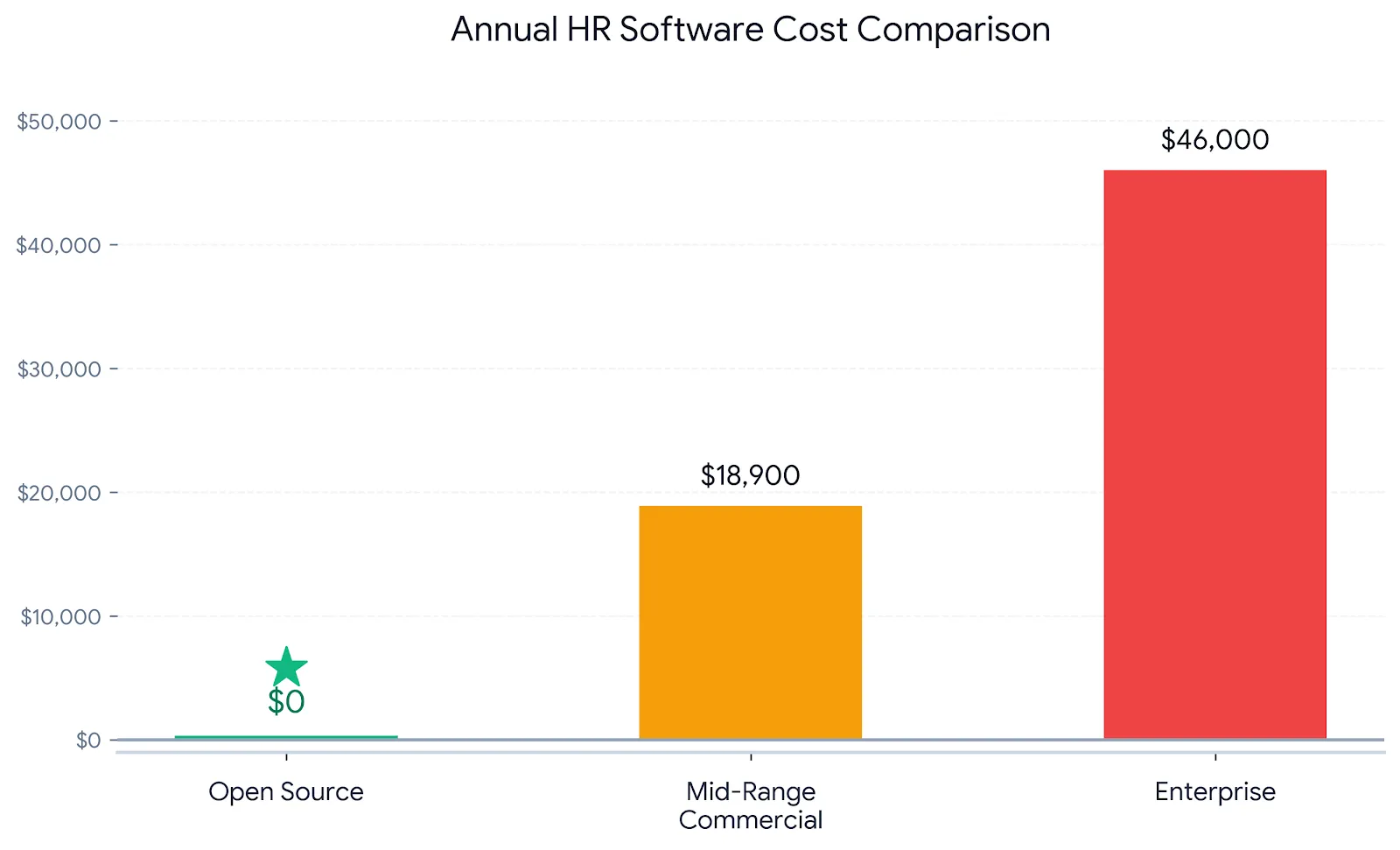
Enterprise HR platforms typically charge $8–$20 per employee per month. For a 100-person company, that is $9,600–$24,000 per year — just for the software license. Add implementation fees (often $10,000–$50,000+), training, and ongoing support, and the total cost of ownership can easily exceed $50,000 annually for a mid-size organization.
For small businesses and startups, these numbers are simply not viable. They are forced to choose between:
- Overpaying for features they do not need.
- Using spreadsheets that do not scale.
- Going without HR software entirely, accepting the administrative burden and compliance risk.
Open-source changes this equation entirely. The software itself is free. There are no per-user license fees. Organizations pay only for hosting (if self-hosting) or nothing at all (if using a free cloud tier). A 100-person company using OpenHRApp pays $0 for the software — versus potentially $24,000+ per year for a proprietary alternative.
Beyond Cost: The Transparency Advantage
Cost savings get organizations in the door, but transparency keeps them there. With open-source software:
- The code is public. Anyone can inspect it for security vulnerabilities, backdoors, or poor engineering practices. Proprietary vendors ask you to trust that their software is secure; open-source projects let you verify.
- No vendor lock-in. Your data belongs to you. You can export it in standard formats at any time. You are never held hostage by a proprietary data format or a contract that makes migration prohibitively expensive.
- Community-driven roadmap. Features are prioritized based on what users actually need — not what a sales team thinks will close the next enterprise deal. If you need a feature, you can build it yourself or sponsor its development.
- Longevity. If a proprietary vendor goes out of business or gets acquired (and their product gets "sunset"), you lose your HR system. With open-source, the code lives on. Even if the original maintainers step away, the community can fork and continue development.
Security: Open Source vs. Proprietary
There is a persistent myth that proprietary software is more secure because "hackers can not see the code." Security experts overwhelmingly disagree. The consensus in the security community is that open-source software tends to be more secure because:
- More eyes on the code — Thousands of developers and security researchers can review open-source code for vulnerabilities. Proprietary code is only reviewed by the vendor's internal team.
- Faster vulnerability fixes — When a vulnerability is discovered in open-source software, fixes are often available within hours or days. Proprietary vendors may take weeks or months to release patches.
- No security through obscurity — Relying on attackers not being able to see your code is not a security strategy. It is wishful thinking. Real security comes from sound engineering, encryption, access controls, and regular audits — all of which apply equally (or more so) to open-source projects.
The Community Innovation Engine
Open-source HR software improves faster than proprietary alternatives because of how development works:
- Diverse contributors — Developers from different organizations, industries, and countries contribute code. A feature built for a manufacturing company in Bangladesh might solve a problem for a tech startup in Berlin.
- Rapid iteration — Bugs are reported publicly, fixes are contributed by the community, and releases happen frequently. The feedback loop is days or weeks, not months or quarters.
- No artificial feature gating — In proprietary software, the best features are often reserved for the highest pricing tier. In open-source, every feature is available to everyone. This aligns incentives: the goal is to build the best possible product, not to upsell.
Real Organizations, Real Savings
Around the world, organizations are making the switch:
- A 50-person tech company in Southeast Asia switched from a $12/user/month proprietary HRMS to OpenHRApp, saving $7,200/year. They used those savings to fund an additional junior developer position.
- A non-profit with 30 employees needed attendance tracking and leave management but had zero budget for software. OpenHRApp provided everything they needed at no cost.
- A 200-person manufacturing company with factory shifts was quoted $30,000/year for an enterprise HRMS. They adopted OpenHRApp, customized the shift management module to their needs, and paid nothing.
The Role of Managed Hosting
One valid concern about open-source software is the technical expertise required to self-host. Not every organization has a DevOps engineer on staff who can manage servers, databases, and backups. This is where managed hosting (or free cloud tiers) comes in.
OpenHRApp, for example, provides a free cloud-hosted version at openhrapp.com. Organizations sign up and start using the software immediately — no servers to manage, no databases to configure, no backups to schedule. The experience is identical to signing up for a proprietary SaaS product, except there is no bill at the end of the month.
For organizations that prefer self-hosting (for data sovereignty, compliance, or customization reasons), the option is always available. This flexibility — use our cloud, or host it yourself — is something proprietary vendors cannot offer.
What to Expect in the Coming Years
The open-source HR software movement is still in its early stages, but the trajectory is clear:
- More organizations will switch as open-source HR platforms reach feature parity with proprietary alternatives.
- Enterprise adoption will grow as security certifications (SOC 2, ISO 27001) become more common in open-source projects.
- Integration ecosystems will expand — APIs, plugins, and connectors will make open-source HR platforms interoperable with the broader business software landscape.
- AI and automation will become standard in open-source HR tools, just as they are in proprietary alternatives — with the key difference that the algorithms and training data are transparent.

Is Open-Source HR Right for Your Organization?
Open-source HR software is ideal if:
- You want to avoid per-user pricing that scales with your headcount.
- You value data portability and do not want to be locked into a single vendor.
- You appreciate transparency — being able to see exactly how the software works.
- You have the technical capability to self-host, or you are comfortable using a free cloud-hosted version.
Proprietary HR software may still be the right choice if:
- You need guaranteed SLAs with financial penalties for downtime.
- You require 24/7 phone support (though many open-source projects now offer paid support tiers).
- You operate in a heavily regulated industry with specific compliance certifications that open-source projects have not yet obtained.
Conclusion
The rise of open-source HR software is not just about saving money — it is about a fundamentally better model for building and distributing software. Transparent development, community-driven priorities, no vendor lock-in, and the freedom to customize. As open-source HR platforms continue to mature, the question is shifting from "Why would I use open-source HR software?" to "Why would I pay thousands of dollars per year for something I can get for free?"
Further Reading
- OpenHRApp vs Commercial HRMS: An Honest Look — Feature-by-feature comparison, total cost analysis, and guidance on when to choose each option.
- Why We Built OpenHRApp: The Story Behind the Open-Source HR Platform — The origin story, the problems we set out to solve, and our vision for the future of HR technology.
OpenHRApp is a free, open-source HR management platform. No per-user fees, no time limits, no catch. Start today.